Research
The Search Prompt Integrity & Learning Lab
-
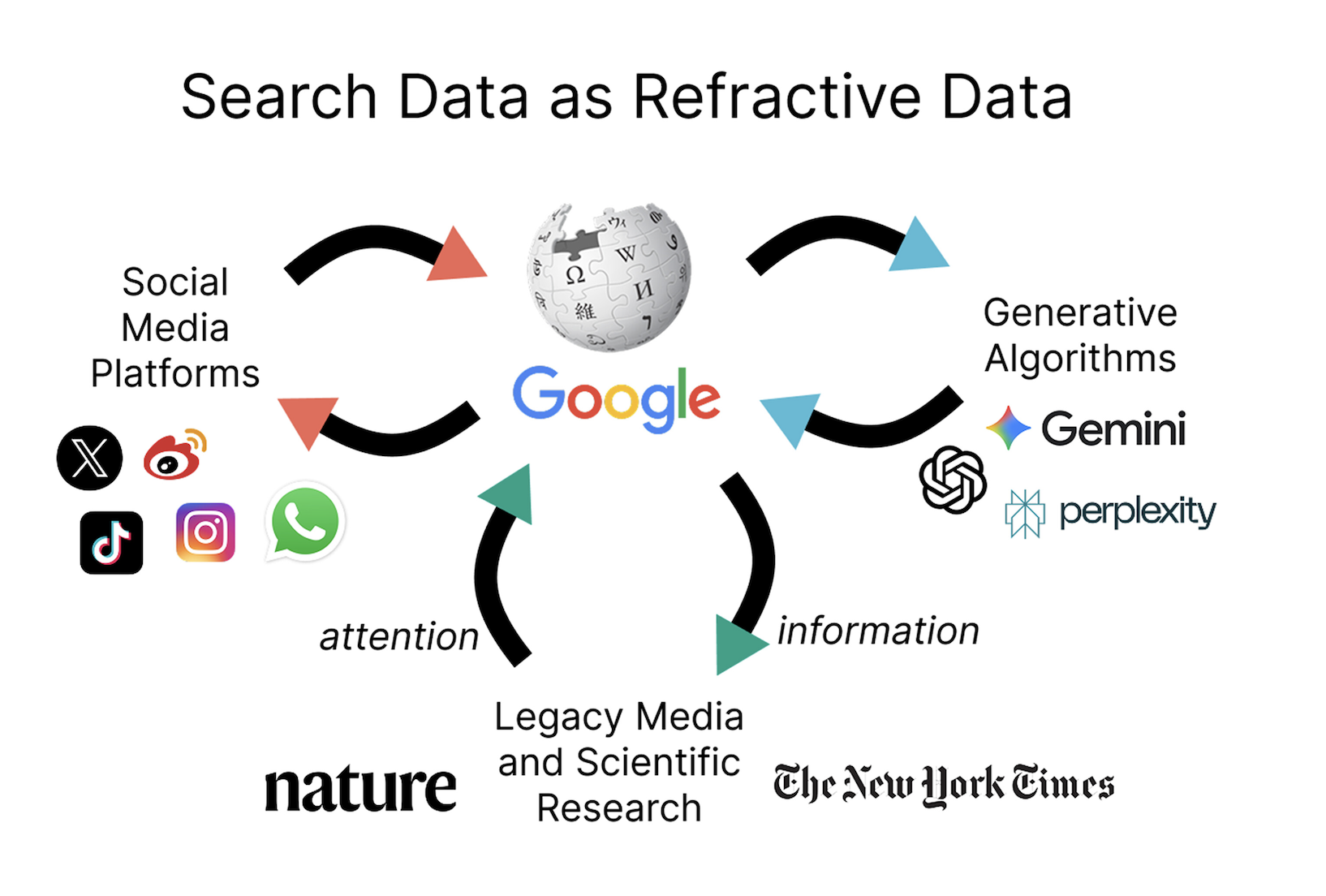
Refractive Datasets as a Sensemaking Methodology in Closed Data Ecosystems (Post-API Era)
We propose analyzing refractive datasets (i.e. datasets from platforms with relatively more open data policies that reflect data from closed datasets) as a methodology for researchers to understand platforms in the post-API era.
-

Abortion Near Me? The Implications of Semantic Media on Accessing Health Information
Despite search engines' crucial role in health information, the study finds that search accuracy on abortion topics is influenced by users' positions and hindered by search engine optimization and advertising.
-

Ms. Categorized: Gender, notability, and inequality on Wikipedia (Women's Biographies)
This paper describes how biographies about women who meet Wikipedia’s criteria for inclusion are more frequently considered non-notable and nominated for deletion compared to men’s biographies.
-

“Too Soon” to count? How gender and race cloud notability on Wikipedia
Applying a combination of web-scraping, deep learning, natural language processing, and qualitative analysis to pages of academics nominated for deletion on Wikipedia, we demonstrate how Wikipedia's notability guidelines are unequally applied across race and gender.
-

‘Do your own research': affordance activation and disinformation
This paper bridges a gap in affordance theory by analyzing how pundits, propagandists, and conspiracy theorists activate technological affordances on platforms like Twitter, Google Scholar, and Yandex, transforming disinformation into an entangled, participatory process.
-

ReOpen demands as public health threat
A sociotechnical framework for understanding the stickiness of misinformation
Experience a world where imagination knows no bounds, where ingenuity flourishes, and where possibilities are endless.